


A cheap website that looks fine on launch day can become an expensive nuisance six months later. It may be hard to edit, invisible for the services you actually want to sell, or so similar to competitors that nobody remembers it. The real question in bespoke versus template websites is not which option is ‘best’. It is which one gives your business the right platform for where it is now – and where you need it to go.
For some smaller businesses, a well-chosen template is a sensible way to get online quickly. For others, it is a false economy that creates limits before the website has had a chance to earn its keep. No smoke, no shortcuts: the right choice comes down to your goals, your offer and the commercial job your website needs to do.
Bespoke versus template websites: the real difference
A template website starts with a pre-designed framework. You choose a layout, add your logo, colours, words and images, then adjust the available settings. WordPress themes, website builders and ecommerce platforms all offer versions of this approach. It can be fast, relatively affordable and perfectly acceptable for a straightforward brochure site.
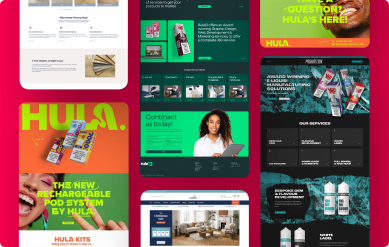
A bespoke website is designed and built around your business. The page structure, user journeys, visual identity, content hierarchy and functionality are planned specifically for your customers and objectives. It does not mean reinventing every bit of technology from scratch. It means using proven platforms and building the parts that matter around how your business works.
That distinction matters. A template asks your business to fit its layout. A bespoke site makes the layout fit your business.
What a template website does well
Templates get unfairly dismissed by some agencies because they are not the right answer for every project. That is nonsense. A good template can be useful when speed matters, budgets are tight and your requirements are genuinely simple.
If you are launching a new venture, testing a service, promoting a single local offering or need a tidy holding presence while a larger project is planned, a template can get the basics in place. You can present your contact details, explain what you do, show a small gallery and give people a clear route to get in touch.
They are also often easier to start with for businesses that want to make occasional edits themselves. Most modern systems offer visual editing, pre-built blocks and familiar controls. For a small site with limited content, that can be enough.
The issue is not that templates are bad. The issue is treating them as though they have no trade-offs.
The limits tend to show up later
Template sites often look polished in the demo because the demo uses professional photography, short placeholder copy and an idealised business model. Once you add real services, actual customer questions, case studies, location pages, testimonials and product ranges, the cracks can show.
You may find the page layout will not accommodate the way you need to explain a complex offer. The navigation becomes cluttered. A feature you assumed was included needs another paid plugin. Small design changes suddenly involve custom code. Your site becomes a stack of add-ons, each with its own update cycle and potential conflict.
The bigger problem is usually strategic. Templates are designed to appeal to thousands of businesses, so they are rarely built around the specific reasons someone should choose yours. If your competitors use similar themes, the site can look competent but interchangeable. Competent is not always enough when you are trying to win a high-value enquiry.
When bespoke web design earns its cost
A bespoke site makes most sense when your website is a serious part of sales, reputation or operations. That includes established service businesses competing for valuable leads, ecommerce brands that need to sell well online, and firms whose work is too specialised to explain with a generic page layout.
The investment is not just about having something prettier. Good bespoke design begins by deciding what visitors need to understand, trust and do. It gives priority to the pages that drive enquiries or sales, rather than treating every page as an equal box in a theme.
For a construction company, that could mean making project credibility, sector experience and tender-ready evidence easy to find. For a Kent venue, it could mean showing atmosphere, availability and booking details without sending people on a treasure hunt. For a specialist supplier, it could mean clear product filtering, confident technical information and a checkout that does not create needless hesitation.
A bespoke build can also make your brand feel joined up. Your logo, colour, photography, language and digital experience should tell the same story. If you have invested in good branding but place it inside a rigid, generic template, the result can feel like a smart suit worn with someone else’s shoes.
Better structure supports better visibility
Search engine optimisation is not a magic switch applied after the website goes live. The structure of the site affects how clearly search engines and people can understand what you offer.
With a bespoke approach, service pages, location pages, category structures and internal navigation can be planned around real search demand and customer intent. That does not guarantee top rankings – anyone promising that is selling fairy tales – but it gives organic growth a stronger foundation.
It also helps you avoid the common template problem of forcing every service into the same thin page format. Search visibility usually grows when you can explain a service properly, answer relevant questions and demonstrate evidence of experience. Your content needs room to do its job.
Bespoke should still be manageable
Custom does not mean dependent on a developer for every comma. In fact, a properly built bespoke WordPress website should make routine updates simpler because the editing experience is shaped around the content you actually need to manage.
Your team should be able to update services, add news, publish case studies, change team members or manage products without worrying that one edit will wreck the layout. The aim is control with sensible guardrails, not a mysterious dashboard stuffed with options nobody understands.
The cost question: look beyond the build price
A template usually costs less to launch. That is true, and it matters. But comparing the upfront price alone is like choosing a van purely because it is cheapest on the forecourt, without checking whether it can carry the tools you need.
Consider what happens after launch. Will you need paid apps or plugins to add essential features? Is the theme actively maintained? Can it cope with future pages, new services or more products? Does it load quickly enough on mobile? Can it be adjusted without a rebuild when your brand develops?
A bespoke site costs more because it involves discovery, design thinking, tailored development and testing. It should also save money in the right places: fewer compromises, less patching around a rigid template and a clearer route for growth. That value is strongest where one extra lead, booking or order can cover a meaningful part of the investment.
That said, bespoke is not automatically sensible. If your offer is not yet defined, your content is not ready, or cash flow is tight, spending heavily on a large custom build may be premature. Start with a site that is honest about what the business needs now, then plan the next step rather than pretending every business needs the same solution.
How to make the right call
Start with the commercial purpose of the website. If it only needs to establish basic legitimacy and generate occasional contact, a high-quality template may do the job. Choose one carefully, keep the content focused and do not overload it with gimmicks.
If the site needs to differentiate you, generate regular qualified enquiries, support a sales process, carry substantial content or sell products, bespoke design deserves serious consideration. The more your revenue relies on the website performing well, the less sensible it is to accept generic constraints by default.
Ask practical questions before committing. Can the site show your work at its best? Will visitors find the information they need on a phone? Can your team make ordinary updates? Does the proposed structure support the services and locations you want to be found for? And when the business changes, can the site change with it?
Avoid being impressed by a long feature list. A website does not win work because it has sliders, animations and twenty plugin badges. It wins work because it makes the right people trust you, understand your value and take the next step.
Build for the business you are becoming
The best website is rarely the most complicated one. It is the one that removes friction for customers and gives your business a credible, useful platform to grow from. Sometimes that is a lean template done properly. Sometimes it is a fully bespoke build that reflects the standard of your work.
Be clear about the job before you buy the tool. Your website should not merely prove that you exist. It should make your business look like it means it.

Keep Reading
Related Articles
 Web Design
What a Construction Website Case Study Reveals
A construction website case study showing how clear positioning, proof, service pages and practical SEO turn visits into better construction enquiries online.
Read Article Web Design
How to Reduce Cart Abandonment and Sell More
Learn how to reduce cart abandonment with a faster, clearer checkout, better product pages and practical fixes that help UK ecommerce shops sell more.
Read Article Web Design
How to Improve WooCommerce Checkout and Sell More
Learn how to improve WooCommerce checkout with practical fixes that cut friction, build trust and help more UK shoppers complete their orders online.
Read Article