


A local SEO turnaround is rarely about one broken setting or a magic new keyword. More often, it is the work of making a business properly understandable to Google and properly convincing to the people who find it. If your phone is quieter than it should be, your website is buried below firms you know you can outperform, or your leads are arriving from the wrong places, that work matters.
For a Kent business, local search is not vanity traffic. It is someone looking for a roofer in Maidstone, a specialist supplier near Canterbury, a venue for a celebration, or a professional service they can trust. They are close to making a decision. The job is to make sure your business appears, makes sense immediately and gives them a reason to get in touch.
A local SEO turnaround starts with the real problem
Plenty of businesses are told they need “more SEO” when they actually need a clearer offer, a better website or basic housekeeping done properly. Publishing a few thin blogs will not fix a slow site with confused service pages. Nor will a polished new logo alone solve a Google Business Profile filled with old opening hours, weak reviews and the wrong service area.
The first step is diagnosis, not activity for activity’s sake. Look at where enquiries come from, which services are most profitable, the towns and areas you can genuinely serve, and what potential customers see when they search. Then compare that against the businesses appearing in the map results and the organic listings.
You are looking for gaps with commercial consequences. Perhaps competitors have individual pages for every key service while yours puts everything on one vague page. Perhaps they have a steady flow of recent reviews, location evidence and useful project photography. Perhaps your website looks fine on a desktop but is hard work on a phone, where most local searches happen.
A turnaround has to focus on the gap that is costing you business first. No smoke, no shortcuts and no monthly report full of numbers that have nothing to do with sales.
Fix the foundations before chasing rankings
Google needs consistent, credible signals. Customers do too. That means your business name, phone number, address or service area, opening hours and core services should be accurate everywhere they appear. Small inconsistencies are not always fatal, but they create doubt and make the job harder than it needs to be.
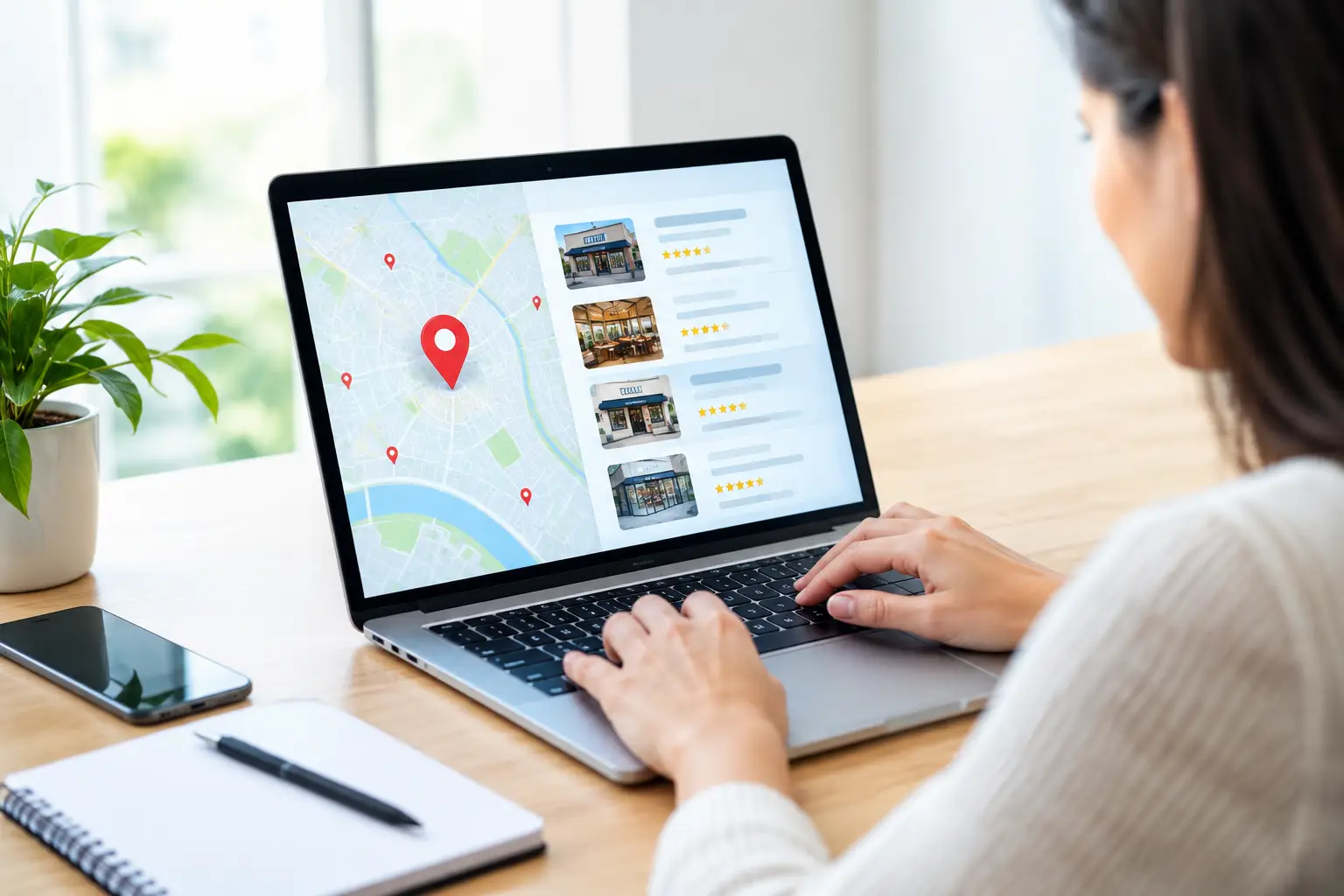
Your Google Business Profile deserves proper attention. It is often the first thing a local prospect sees, even before they reach your website. Choose the most accurate primary category, complete relevant services, use real photographs, keep details current and respond to reviews like a human being. A blank or neglected profile tells customers that nobody is minding the shop.
Reviews are particularly important, but not because you need to badger every customer for five stars. A consistent, honest stream of feedback helps people understand what it is like to work with you. Ask after a successful job, make the request easy and reply with care. If a review is less than glowing, a measured response can build more confidence than silence.
Your website must then back up what the profile promises. A visitor looking for emergency drainage work, commercial flooring or bespoke kitchen design should land on a page that answers the obvious questions: what you do, where you work, why you are credible, what the process looks like and how to enquire. Make the next step clear. A phone number buried in a footer is not a conversion strategy.
Build pages around services, not search-engine tricks
A common mistake is producing near-identical pages for every nearby town. Swap “Maidstone” for “Ashford”, change two sentences and hope for the best. It reads badly, adds little value and can leave your site looking manufactured rather than trustworthy.
Start with strong service pages instead. Give each meaningful service enough room to explain the work, show relevant examples, answer common objections and state the locations you cover naturally. If a location page is justified, it should contain something specific: local projects, practical area knowledge, different service availability or useful information for that audience.
The right structure depends on the business. A trades firm serving a wide area may need clear service pages and a concise areas-we-cover page. A clinic or restaurant with a physical premises needs stronger location signals, directions and visitor information. A business with several branches needs each location represented accurately, without turning the site into a copy-and-paste exercise.
Make your local SEO turnaround commercially useful
Traffic is easy to make look impressive. A rise in visits from people who will never buy from you is not a win. Track the actions that indicate genuine demand: calls, contact forms, booking requests, direction requests, quote starts and online sales where relevant.
That also means being honest about search demand. You may rank first for a niche phrase and receive very little work from it. Another phrase may be more competitive but far more valuable because it is used by people who need help now. Good local SEO balances quick opportunities with the slower job of building visibility for the searches that sustain a business.
For many firms, the highest-value pages are not the most glamorous. They are the ones that remove hesitation. Pricing guidance where appropriate, clear turnaround times, accreditation, case studies, before-and-after imagery and straightforward FAQs can all help a visitor decide that you are worth contacting.
This is where design and SEO should work together rather than compete. A page can be technically optimised and still fail if it feels dated, is difficult to scan or gives no proof of competence. Equally, a beautiful website that says very little about its services will struggle to attract the right search traffic. Credibility and visibility are part of the same job.
Build proof that cannot be copied overnight
The businesses that hold local visibility tend to build a body of evidence over time. Their websites explain their expertise clearly. Their profiles stay active. Their reviews reflect recent work. Their project pages show they have done the kind of job a customer needs.
Case studies are especially useful for specialist firms, construction businesses and high-consideration services. They do not need to read like award entries. Explain the client’s problem, the work completed, the decisions involved and the result. Include original photographs where possible. This gives prospective customers confidence while creating useful, distinctive content around the services and places that matter.
Local relevance can also come from genuine relationships: industry associations, suppliers, community involvement, local press coverage or partnerships. The key word is genuine. Paying for piles of low-quality directory listings or irrelevant links is a false economy. It may produce a busy-looking spreadsheet, but it does not create the reputation that lasts.
Do not confuse movement with progress
Rankings fluctuate. Search results differ by location, device and personal search history. Map results can be especially volatile. A sensible approach is to watch trends over months, alongside enquiry quality and revenue, rather than panicking over a one-position dip on a Tuesday morning.
You also need to allow enough time. Technical fixes and profile improvements can have an effect relatively quickly. Building trust for competitive services, especially in crowded areas, takes longer. Anyone promising guaranteed number-one positions without asking about your market, website or competitors is selling certainty they do not have.
That does not mean accepting vague progress reports. You should know what has been improved, why it matters, what is being tested and what commercial signal it is expected to influence. A good agency relationship is direct and accountable. RevoStudio’s approach is built around exactly that: experienced people doing the work, explaining it plainly and keeping sight of the business behind the website.
Keep the work moving after the recovery
A local SEO turnaround is not a one-off rescue followed by neglect. Opening hours change, services evolve, competitors improve their sites and customers ask new questions. The best ongoing work is usually practical: update key pages, publish real project evidence, request reviews consistently, repair technical issues and refine conversion points as you learn what generates good leads.
If you only take one thing from this, make it this: local visibility is earned when your business is easy to find, easy to understand and easy to trust. Get those three things right, and the right enquiries have a far better reason to choose you.
