


Your website should make your business look like it means it. If it feels dated, takes too long to load or leaves visitors wondering what you actually do, it is costing you trust before anyone picks up the phone. Knowing how to choose a web design agency is not about finding the flashiest portfolio or the cheapest quote. It is about finding people who understand what your business needs to achieve.
A good agency will make the process clearer, not more confusing. They will ask proper questions, challenge weak assumptions and build something that works for your customers as well as your team. No smoke, no shortcuts.
Start with the business problem, not the website
Before speaking to agencies, get clear on why you need a new website. “We need a refresh” is a fair starting point, but it is not enough to guide a useful project.
Perhaps your business has outgrown its branding. Maybe the site brings in the wrong enquiries, does not show up on Google, is impossible to update or makes buying online harder than it should be. A construction firm may need stronger proof of its work and clearer tender enquiries. A retailer may need better product filters, simpler delivery information and a checkout that does not send customers elsewhere.
The right agency will turn those issues into practical priorities. Design matters, but it is only one part of the job. Your website also needs to explain your offer, earn confidence, work on mobile and give visitors a clear next step.
Look past the homepage in the portfolio
Every agency will show its best-looking work. That is expected. Your job is to look for evidence that the work suits the businesses behind it.
Ask yourself whether the sites make it obvious what the client sells, who it is for and what a visitor should do next. Check them on your phone. Look at service pages, contact journeys, product pages and menus, not just the polished homepage screenshot.
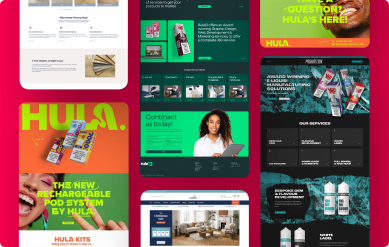
A strong portfolio should show variety without looking random. A good web design agency does not force every client into the same template with a different logo and colour palette. It creates a distinct identity while applying sound principles around navigation, speed, accessibility and conversion.
Sector experience can help, particularly if your project has specialist requirements. An ecommerce website, for example, needs more than attractive product images. It needs sensible product management, clear stock and delivery messages, secure payments and a checkout journey that feels effortless. But do not dismiss an agency simply because it has not worked in your exact trade. Commercial thinking and a willingness to learn often matter more than a recycled industry template.
Ask who will actually do the work
This is where many agency pitches become slippery. You meet senior people in the sales meeting, then the project is passed through layers of account management to a junior designer or developer you never speak to.
Ask directly who will lead the strategy, design and build. Ask who you can contact during the project, how often you will speak and whether the people presenting the work are the people producing it. There is nothing wrong with a larger team, but you need to know how decisions will move and who is accountable when something needs fixing.
For many small and medium-sized businesses, a small experienced team is a better fit. You get direct access to the people doing the thinking, fewer messages lost in translation and more honest conversations about what is worth spending money on.
How to choose a web design agency with commercial sense
A website can win awards and still fail the business. If visitors cannot quickly understand your service, find the information they need or make an enquiry, the clever animation has not helped much.
During early conversations, listen to the questions an agency asks. A commercially switched-on team will want to know about your customers, average order value, lead quality, sales process, competitors, existing traffic and what happens after an enquiry arrives. They will ask which services are most profitable, not only which pages you want in the navigation.
They should also talk about measurement. That does not mean drowning you in dashboards. It means agreeing what success looks like: more qualified enquiries, better ecommerce conversion, stronger organic visibility, fewer support calls or a site your team can update without paying a developer for every small change.
Be wary of promises of page-one rankings, instant lead volumes or a website that will “transform everything” without any discussion of your market. SEO is useful when it is built into a sensible long-term plan, with relevant content, sound technical foundations and a clear understanding of search demand. It is not a magic switch.
Get clear on scope before comparing prices
A cheap quote can become an expensive website if the essentials were never included. Equally, the highest price is not automatically the best value. Compare proposals line by line and make sure each agency is pricing the same level of work.
A useful proposal should explain the project stages, number of key page designs, content responsibilities, revision process, platform, testing, training, launch support and any ongoing costs. If photography, copywriting, brand work, ecommerce setup, SEO migration or integrations are needed, establish whether they are included or separate.
Pay particular attention to content. Agencies can design around placeholder text, but your finished website needs clear, persuasive words and credible imagery. Decide early whether you will provide these, need support creating them or expect the agency to handle the lot. Leaving it vague is one of the quickest ways to delay a project.
You should also ask what happens after launch. Will you own the website and its accounts? Can your staff edit pages, add products and publish news without specialist help? What are the hosting, maintenance and support arrangements? A website should make your operation easier, not create a permanent dependency.
Judge communication before you sign
The sales process is a preview of the working relationship. If an agency takes days to answer basic questions, avoids giving straight answers or makes everything sound more technical than it needs to be, do not expect that to improve once the deposit is paid.
Good agencies explain trade-offs in plain English. They might tell you that a feature is possible but not worthwhile, that your budget will go further by improving core service pages first, or that a full ecommerce rebuild is premature until product data is sorted. That honesty is valuable.
You should feel able to ask basic questions without being made to feel out of your depth. You know your business. The agency should bring the design, technical and search expertise, then help you make informed decisions. It is a partnership, not a test of who can use the most jargon.
Check the technical foundations
You do not need to become a developer to ask sensible questions. Find out which platform they recommend and why. For many growing businesses, a bespoke WordPress website provides the right balance of flexibility, ownership and manageable editing. For product-led businesses, WooCommerce can be a practical option when it is properly planned and built around how your team handles orders.
Ask how the agency approaches mobile design, page speed, security, backups, accessibility and browser testing. These are not glamorous extras. They shape whether people can use the site and whether it remains reliable after launch.
If you are replacing an existing website, ask how existing search visibility, URLs, forms and analytics will be handled. A careless migration can lose valuable rankings and break enquiries overnight. A considered agency will map the move properly rather than treating launch day as the end of the work.
Speak to past clients, then trust the evidence
Testimonials are useful, but a short conversation with a past client can reveal far more. Ask whether deadlines were realistic, how the agency handled feedback, whether costs stayed under control and what support was like after launch.
You are not looking for a project with no bumps at all. Most worthwhile projects involve decisions, changing priorities and the odd snag. You are looking for an agency that communicates early, solves problems calmly and does not disappear when the site goes live.
The best choice may not be the agency with the loudest pitch. Choose the one that understands your commercial goals, shows relevant evidence, gives you clear ownership and speaks to you like a person. A well-built website is not just a new coat of paint. It is a working part of your business, so choose people who will treat it that way.

Keep Reading
Related Articles
 Web Design
How to Improve WooCommerce Checkout and Sell More
Learn how to improve WooCommerce checkout with practical fixes that cut friction, build trust and help more UK shoppers complete their orders online.
Read Article Web Design
Bespoke Versus Template Websites: Which Fits?
Bespoke versus template websites: see what you gain, what you compromise and how to choose a site that supports sales, growth and easier day-to-day use.
Read Article Web Design
Website Speed Optimisation That Pays Its Way
Website speed optimisation cuts friction, supports SEO and helps more visitors enquire or buy. Here is what to fix first, and why it pays back...
Read Article