


Your website may not be broken. It may load, show your phone number and look acceptable at a glance. But if it fails to explain what you do, makes your business look smaller than it is or leaves good prospects unconvinced, it is costing you work. Website redesign services should do more than give the homepage a fresh coat of paint. They should make the site easier to use, easier to manage and far more useful commercially.
For many Kent businesses, the warning signs are familiar. Enquiries have slowed, the site looks dated beside competitors, it is awkward on mobile, or every small edit means chasing a developer. A redesign is the chance to fix the issues behind those frustrations properly, rather than papering over them.
A redesign is not just a prettier website
Good design matters. People form an opinion quickly, and a tired logo, stock-heavy visuals or clumsy page layout can make a capable business feel less credible than it is. But appearance alone will not turn a visitor into a customer.
The real job is to put the right information in front of the right person at the right point. A homeowner looking for a specialist contractor wants reassurance, examples of relevant work and a clear route to get in touch. A buyer on an ecommerce site needs to understand the product, trust the price and reach checkout without unnecessary friction. A corporate decision-maker may need proof of experience, accreditations and a confident explanation of your process.
That is why a proper redesign starts with questions, not colour palettes. What is stopping people from contacting you? Which services bring the best work? What do customers repeatedly ask before they buy? Where does your current site create doubt, delay or confusion?
The answers shape the structure, content and calls to action. No smoke, no shortcuts.
When website redesign services make commercial sense
Not every ageing website needs replacing. If its foundations are sound and the problem is a poor service page or neglected content, targeted improvements could be the sensible route. Rebuilding for the sake of it is wasteful.
A full redesign becomes worthwhile when the issues run deeper. Perhaps the business has changed direction, the branding no longer reflects its standard, the website is hard to update, or the navigation has grown into a maze. Maybe the site was built around old priorities and does not support your current sales process. For online shops, a clunky mobile checkout or difficult product administration can quickly become an operational headache as well as a sales problem.
There is also the visibility question. If Google cannot clearly understand your services, locations and expertise, a better-looking site will not solve the whole problem. Search performance needs to be considered during the redesign, from page structure and content hierarchy to technical setup and redirects from old URLs.
The aim is not change for change’s sake. It is a website that better reflects where the business is now and where it needs to go next.
What a useful redesign process looks like
Start with the business, not the template
A template can be quick, and there is a place for quick when the budget and brief demand it. The trade-off is that templates often encourage businesses to squeeze their message into somebody else’s structure. You end up with familiar blocks, vague headings and a site that could belong to almost anyone.
A tailored build starts with the commercial picture. That includes your audience, competitors, services, brand position and the actions you want visitors to take. It also means being honest about what matters most. If 80% of your valuable leads come from two services, those services should not be buried under a generic overview page.
For RevoStudio, this work is about making businesses look like they mean it. That involves clear brand presentation, but it also involves decisions that help a visitor understand the offer without digging for it.
Build a structure people can follow
Visitors do not arrive with unlimited patience. They scan, compare and make quick judgements. Navigation needs to be logical, pages need a clear purpose and key information should be easy to find on a phone as well as a desktop.
That does not mean every page should be stripped back to a few slogans. Specialist businesses often need detail to build confidence. The answer is to organise that detail properly: lead with the main point, explain the benefit, support it with evidence and make the next step obvious.
A good site structure also gives search engines a clearer map of your business. Distinct, useful pages for core services are usually more effective than one catch-all page trying to rank for everything.
Design for credibility and action
The best website design has a job to do. It should make your brand recognisable, make content comfortable to read and guide users towards the next sensible action. That might be requesting a quote, booking a consultation, visiting a showroom or buying a product.
Calls to action should be clear without becoming pushy. A service business may benefit from a simple enquiry form and prominent phone number. An ecommerce shop needs strong product photography, honest delivery information and an uncomplicated checkout. What works depends on the customer journey, not on a fashionable layout trend.
Mobile design is not an afterthought here. Most people will first encounter your business on a smaller screen, often while distracted or short on time. If forms are fiddly, text is cramped or buttons are hard to tap, they will not hang about.
Do not lose what is already working
A redesign can damage search visibility when it is handled carelessly. Pages that rank, attract links or bring steady enquiries cannot simply disappear because the new sitemap looks tidier. Their value needs to be assessed before work begins.
This is where website redesign services need practical SEO knowledge, not a last-minute plugin installation. Existing pages should be reviewed, worthwhile content improved and old URLs redirected to the most relevant new pages. Metadata, headings, internal links, image optimisation and page speed all deserve attention too.
There are occasions when a low-performing page should be removed or merged. That is fine if there is a clear reason. The point is to make deliberate choices based on evidence, rather than launch a lovely new site and wonder why rankings vanish a fortnight later.
A website your team can actually run
Too many businesses inherit a website that only its original developer understands. A new staff member cannot update a team profile. A minor text change requires a support ticket. Adding a product becomes a job for someone technical. It is frustrating, slow and needlessly expensive.
A well-built WordPress website should give your team control over the regular jobs. You should be able to update content, post news, add case studies and manage basic page changes without worrying that the whole thing will fall apart. For WooCommerce stores, product updates, stock management and order handling should be practical for the people doing the work each day.
That does not mean handing you a complicated control panel and wishing you luck. It means building sensible editing tools, keeping the system clean and providing a proper handover. You stay in control, while experienced support remains available for larger improvements or technical issues.
Questions worth asking before you hire an agency
Before committing to a redesign, ask who will actually do the work. If the sales meeting is polished but delivery disappears behind account managers and junior staff, you may not get the direct expertise you were promised.
Ask how the agency will understand your customers and priorities. Ask how existing rankings and content will be protected. Ask what happens after launch, what you will be able to edit yourself and how costs are set out. Straight answers matter more than an impressive pitch deck.
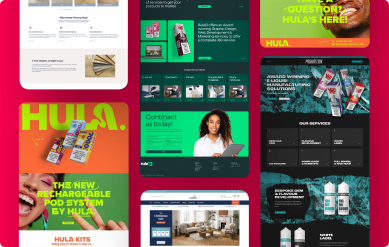
You should also look beyond a portfolio screenshot. A good-looking project is encouraging, but ask what it was designed to achieve. Did it clarify a complicated offer? Improve the shopping journey? Make it easier for the client to manage? The work should stand up commercially as well as visually.
A redesign is a chance to stop apologising for your website and start using it as a proper business tool. Be clear about what needs fixing, protect the value you have already built and choose people who will give you honest advice. The result should feel less like a digital ornament and more like a capable member of the team.

Keep Reading
Related Articles
 Web Design
How to Reduce Cart Abandonment and Sell More
Learn how to reduce cart abandonment with a faster, clearer checkout, better product pages and practical fixes that help UK ecommerce shops sell more.
Read Article Web Design
How Much Does a Website Cost in the UK in 2026?
Wondering how much does a website cost UK businesses? See realistic 2026 prices, what changes the quote and where spending more actually pays off for...
Read Article Web Design
How to Choose a Web Design Agency That Delivers
Learn how to choose a web design agency that builds credibility, generates enquiries and gives your business a website you can manage with confidence.
Read Article