


Your website is often the first proper meeting a customer has with your business. If it looks dated, loads badly or makes people work to find the basics, that meeting is over before you get a chance to sell. WordPress agency selection is therefore not just about finding someone who can build pages. It is about choosing people who understand how your business needs to look, work and grow.
A polished proposal is easy to produce. A credible website that brings in the right enquiries, gives your team control and does not become a problem six months after launch is harder. Here is how to tell the difference.
Start with the business problem, not the feature list
Before speaking to agencies, get clear on what needs fixing. Perhaps your current site makes a good business look smaller than it is. Perhaps customers cannot understand your services quickly enough. Maybe your online shop is clumsy to manage, or Google barely knows you exist.
Those are commercial problems. They should shape the brief far more than a list of fashionable features.
A good agency will ask about your customers, sales process, competitors and what a valuable lead looks like. They should want to know whether you need more quote requests, more bookings, stronger credibility in tenders or more product sales. If the conversation jumps straight to templates, animations and page counts, take that as a warning. Design matters, but design without a job to do is decoration.
WordPress agency selection: look beyond the portfolio
A portfolio should prove more than an ability to make attractive homepages. Ask what each website was designed to achieve and how the agency made that happen. For a trades business, that may mean clearer service pages, location coverage and faster enquiry routes. For a product business, it could mean better product filtering, confidence at checkout and simpler stock management.
Look for variety, but also relevance. An agency with a striking website for a restaurant may still be the wrong fit for a construction firm with a long sales cycle. You want evidence that they can translate a business model into a useful customer journey.
Also check the details that screenshots hide. Are the sites easy to use on a phone? Is the navigation clear? Does the content answer the questions a potential customer would ask before getting in touch? A site can win design awards and still be poor at winning work.
Ask who will actually do the work
Many businesses assume the people they meet at the pitch will be involved throughout the project. That is not always the case. Some agencies are built around sales teams and account managers, with delivery passed down to whoever has capacity.
There is nothing wrong with a larger team if the process is clear and the expertise is there. But you deserve a straight answer about who is leading strategy, design, development and content guidance. Ask whether you will speak directly to the people making the decisions, and who is accountable when something needs resolving.
For a small or medium-sized business, direct access is often worth far more than layers of meetings. It keeps decisions moving, reduces misunderstandings and means the people building the site understand the business behind it.
Separate bespoke work from a dressed-up template
WordPress is flexible. That is one reason it is such a good platform for ambitious small businesses. It can also be used badly, with an off-the-shelf theme stretched until it vaguely resembles a custom build.
A template is not automatically a bad choice. If your budget is tight, your offer is simple and speed matters most, it may be sensible. The issue is transparency. If you are paying for bespoke website design, you should understand what is genuinely tailored: the brand expression, page structure, user journeys, editor experience and technical setup.
Ask the agency how the website will be built and edited after launch. Will your team be able to update services, case studies, team profiles and basic page content without calling a developer? Will the layout stay consistent when you do? WordPress should give you practical control, not a new dependency.
Get specific about SEO before the build starts
Search visibility cannot be bolted on as an afterthought. The foundations are laid while the site is planned and built: page structure, messaging, technical performance, internal links, service coverage and the way content is organised.
That does not mean an agency should promise page-one rankings by a certain date. Anyone making that promise is selling confidence rather than reality. Search results depend on competition, location, your existing reputation, the quality of your offer and ongoing work after launch.
What you should expect is a sensible plan. The agency should explain how they will research the terms your customers use, create a logical page structure and make sure the site is technically sound. If you serve Kent, Maidstone or a wider area, they should understand the difference between useful local relevance and stuffing place names into every paragraph.
Do not treat content as filler
A new website cannot perform well if the words say nothing. Yet content is often left until the final week, when everyone is tired and the launch date is looming.
Find out who is responsible for it. Some agencies write it, some collaborate with your team and some expect you to supply it. Any of those approaches can work, provided the expectation is set early.
The important point is that content needs direction. It should explain what you do, who it is for, why a customer should trust you and what happens next. For specialist firms, that may mean turning technical knowledge into plain English without making the business sound generic. Good copy supports sales, search and credibility all at once.
Check the commercial detail, not just the headline price
The cheapest quote is rarely the cheapest project. A low figure can become expensive when key pages, revisions, content support, testing, training or launch work appear later as extras.
Ask for a clear scope and read it properly. You need to know what is included, what is not, how changes are handled and what happens if the project takes longer because your team needs more time. A sensible agency will not pretend every variable can be fixed upfront, but they should explain the boundaries without hiding behind jargon.
It is also worth asking about licences, hosting, maintenance and paid plugins. Who owns them? What will they cost each year? Can you move the site elsewhere if you ever need to? Your website is a business asset. You should not be locked out of it by vague arrangements or an agency-owned account you cannot access.
Make support part of the decision
Launching a website is not the finish line. Software updates, security, new content, changing services and evolving search behaviour all need attention over time.
Support does not have to mean an expensive monthly package for every business. A straightforward brochure site may only need occasional help and reliable hosting. An ecommerce business with regular orders, promotions and product changes will need more active support. What matters is knowing what is available, how quickly issues are handled and whether you can get a clear answer from a real person.
Ask how the agency deals with urgent problems, what maintenance covers and whether they offer training for your team. You should be able to run the day-to-day basics with confidence, while knowing experienced help is there when the work goes beyond your comfort zone.
Trust the quality of the questions
The best sign during WordPress agency selection is not a dramatic sales pitch. It is an agency asking intelligent, occasionally challenging questions about your business. They should care if an idea will confuse customers, weaken the brand or waste budget. Agreeing with everything may feel pleasant, but it is not always useful.
Choose people who can explain their thinking in plain English, show relevant proof and be honest about trade-offs. A website is too visible, and too valuable, to leave to smoke and mirrors. The right partner will help you make decisions you can stand behind long after the launch date has passed.
See it in practice
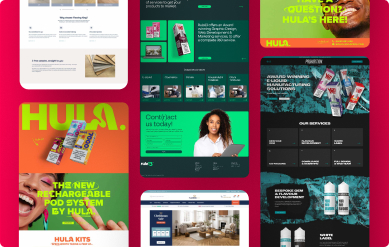
Rule13 are a Kent-based manufacturer specialising in liquid and powder filling, selling to a small and very specific audience. We built their brand identity and a WordPress website with one job: generating qualified leads.
It now brings in one to two contract manufacturing enquiries every day. Read the Rule13 case study.

Keep Reading
Related Articles
 Web Design
Service Website Lead Generation That Works
Service website lead generation is not about chasing clicks. Build a credible, fast and focused website that turns the right visitors into enquiries now.
Read Article Web Design
Conversion Rate Optimisation That Gets Enquiries
Conversion rate optimisation turns more website visitors into enquiries and sales. Learn what to fix first, without wasting your budget or time on guesswork.
Read Article Web Design
How to Design a Service Website That Wins Work
Learn how to design a service website that builds trust, answers buyers' questions and turns local searches into qualified enquiries without fluff.
Read Article