


A cheap website can become very expensive once it starts costing you enquiries, credibility and time. That is why the WordPress agency vs freelancer decision should not begin and end with the quote. You are choosing who will help represent your business, guide important decisions and be there when something needs fixing.
For some projects, a skilled freelancer is exactly the right call. For others, an agency team brings the breadth, process and accountability needed to get the job done properly. The best choice depends on what you are building, what is at stake and how much support you need after launch.
WordPress agency vs freelancer: the real difference
The obvious difference is size. A freelancer is usually one person. A WordPress agency is a team, even if it is a deliberately small one. But the meaningful difference is how that affects your project.
A good freelancer can be quick, talented and excellent value. You may deal directly with the person designing and building the site, which keeps communication simple. If your brief is tightly defined – perhaps a straightforward brochure site, a landing page or a set of targeted improvements – this can work very well.
The risk is that one person has to cover every discipline: discovery, strategy, design, copy guidance, development, testing, search foundations, accessibility, hosting advice and ongoing support. Some freelancers genuinely can cover a lot of ground. Few are specialists in all of it. If they are unavailable, overbooked or move on to another line of work, your website can become somebody else’s problem.
An agency should bring a wider set of skills and a clearer delivery process. That does not mean a large agency with layers of account managers, vague updates and a bill that keeps growing. In fact, many smaller businesses are better served by a compact senior team where the people in the meeting are the people doing the work.
The point is not to hire the biggest supplier. It is to hire the right level of capability for the commercial job in front of you.
Start with the job, not the label
Ask what the website needs to achieve in the next two or three years. If it is simply an online calling card, the answer may be different from a website that must generate qualified leads, support a rebrand, sell products, integrate with business systems or compete in a crowded Google search market.
A local trades business may need sharp positioning, clear service pages, project photography, credible proof and an enquiry journey that works perfectly on mobile. A WooCommerce retailer may need well-organised products, payment and delivery rules, stock processes, customer emails and a checkout that does not lose sales. A specialist B2B firm may need pages that explain complex services clearly and build confidence before a prospect gets in touch.
These are not just development tasks. They involve brand thinking, user experience, content structure, conversion, technical build and search visibility. When several of those elements matter, an agency often earns its fee by joining them up rather than treating the website as a collection of pages.
Cost matters. Cheap is not the same as good value.
Freelancers typically have lower overheads, so their day rates or project fees can be more attractive. If you have a clear brief, content ready to go and modest requirements, that lower cost may be entirely sensible.
Agencies can cost more because you are paying for more than one pair of hands and, ideally, for stronger project control. That extra investment should show up in the work: better discovery, clearer decisions, more rigorous testing, considered design and a site that supports marketing after it goes live. If it does not, you are simply paying agency prices for a dressed-up template.
Do not compare quotes line by line without comparing the thinking behind them. One proposal may include a proper planning phase, bespoke design, page structure, content guidance, technical SEO setup, training and a launch plan. Another may be based on adapting an off-the-shelf theme with little thought given to how the site will win work.
Neither approach is automatically wrong. They are different products. A lower quote can be good value if it matches a modest need. It is poor value if you spend the following year patching gaps, rewriting pages and explaining why the website does not reflect the business you have worked hard to build.
Who is accountable when things get complicated?
Web projects rarely stay perfectly tidy. Content arrives late. A key service changes. A payment provider needs connecting. The person who signs off the work has a new idea after seeing the first design. That is normal.
With a freelancer, problem-solving depends heavily on that individual’s capacity and range. The relationship can be brilliant when they are responsive and organised. It can be difficult when they are juggling too many jobs, away for a week or reluctant to handle work beyond the original scope.
A good agency has systems for this. There should be agreed milestones, named responsibilities, sensible change control and clear explanations without technical theatre. You should know what is included, what is not, and what a change means for cost or timing before it becomes a surprise.
Accountability also matters after launch. Websites need updates, security attention and occasional troubleshooting. More importantly, they need commercial care. Are visitors finding the right pages? Are enquiries coming through? Is the site still aligned with how you sell? A website should not be treated as finished because it has been published.
The quality question is more useful than the supplier question
There are outstanding freelancers and underwhelming agencies. Avoid assuming that either label guarantees quality.
Look at relevant work, not just attractive screenshots. If you run an ecommerce business, ask to see stores with sensible navigation, clear product pages and straightforward buying journeys. If leads are your priority, look for sites that make services easy to understand and calls to action easy to take. Design matters, but it has to do a job.
Then pay attention to the conversation before you sign anything. Are they asking thoughtful questions about your customers, sales process and competitors? Can they explain their recommendations in plain English? Do they challenge a weak idea constructively, or do they agree with everything to get the project over the line?
You also need to know who will do the work. Some agencies sell with senior people then hand delivery to junior staff. Some freelancers outsource sections of a project without being upfront. There is nothing wrong with a specialist team or trusted partners, provided responsibilities are clear and quality is properly managed.
When a freelancer is likely the better choice
A freelancer may be the right fit when the work is focused, low-risk and well specified. For example, you may need a handful of changes to an existing WordPress site, a simple campaign page, a technical fix or a small website where content, brand and structure are already settled.
It can also suit businesses that have internal marketing capability and only need development support. In that case, a good freelancer can slot into your process without charging for services you genuinely do not need.
Choose carefully, though. Check that they can maintain the work they build, communicate reliably and provide a realistic timescale. Ask what happens if an urgent issue crops up after launch. Silence is not a support plan.
When an agency is worth it
An agency is usually the stronger choice when your website is central to growth or reputation. That includes a rebrand, a new ecommerce store, a complex build, a website intended to improve lead quality, or a project where search performance needs to be considered from the beginning.
It is also useful when you need help making the brief better. Many owner-managed businesses know their current site is not working but cannot yet define every page, feature or message needed. That is not a failure on your part. The right partner should turn that uncertainty into a clear plan.
At RevoStudio, the aim is not to add layers for the sake of it. It is to bring branding, bespoke WordPress build, ecommerce thinking and SEO into the same conversation, with direct access to the people delivering the work. No smoke, no shortcuts.
Questions to ask before you choose
Before appointing anyone, ask how they would approach discovery, who will be involved day to day and what they need from you to keep the project moving. Ask whether the website will be bespoke or adapted from a theme, how it will be tested on mobile, and what training you will receive to manage it.
For ecommerce, ask about product management, payment options, delivery rules, customer journeys and what happens when you need to add new products or promotions. For lead generation, ask how the site will support search visibility and how you will measure whether it is producing useful enquiries rather than empty traffic.
Finally, ask what support looks like after the site goes live. A credible answer is specific: response expectations, maintenance arrangements, ownership of accounts and files, and the practical route for future improvements.
The right choice should leave you feeling clearer, not more dependent. Whether you choose a freelancer or an agency, choose the partner who understands the business behind the brief and builds something you can use with confidence.
See it in practice
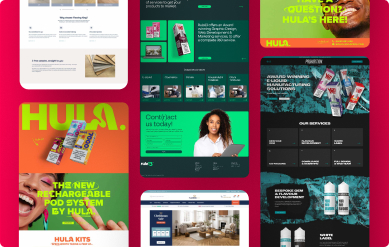
Total Clean Air build bespoke cleanrooms. They needed a rebrand, a new website and someone to take over their SEO, and they wanted it done by one team that understood how the three fit together.
We modernised the logo without losing the feel of the original, built a website that puts them at the front of their industry, and now run their SEO. See the Total Clean Air case study.

Keep Reading
Related Articles
 Web Design
How an Easy to Manage Business Website Pays Off
An easy to manage business website saves time, keeps content accurate and gives your team control - without calling a developer for every small website...
Read Article Web Design
How to Brief Web Designers Without Wasting Time
Learn how to brief web designers with clear goals, useful content and honest priorities, so your new website looks credible and earns its keep properly.
Read Article Web Design
Website Credibility: Why Customers Trust You
Website credibility is earned in seconds. Learn what makes visitors trust your business, stay longer and get in touch or buy with confidence online today.
Read Article